Multilingual Labeling & Packaging
Your labels are promises. Our job is to keep those promises intact in every language.

Every word on your labels, leaflets, and safety documents carries real-world consequences. We operate your multilingual pharmaceutical content across Asian and global languages, so each version stays faithful to the reference label and safe for the people who rely on it.

In pharma, translation is not a marketing extra - it sits next to your regulatory strategy, safety signals, and batch release. A single mistranslated dose or warning is enough to slow an approval or trigger a recall.
1-StopAsia is built to sit inside that reality.
We can work both as an attachment to your architecture or as a completely separate internal team for you. Our teams are trained to apply your rules, and run the language line at the cadence you already run your product.
Our factory will follow your rules and will run the multilingual side of your labeling, safety, and documentation, so your teams can stay focused on science, patients, and getting medicines safely to market.
Your labels are promises. Our job is to keep those promises intact in every language.
When your teams are racing toward an approval or variation deadline, language shouldn’t be the part everyone worries about.
Safety messages have to land clearly, calmly, and consistently - even when the news is difficult.
Frontline teams need instructions they can trust at 3 a.m. on a busy shift, not paperwork that introduces doubt.
Educational content should never drift away from the approved label - but it still has to feel human to the person reading it.
We start by listening - mapping your products, markets, document families, and where language risk is highest. We align on which authorities, templates, and internal standards define “right” for you.
Together we build or refine termbases and style rules around your reference label, internal dictionaries, and agency templates. High-risk sections like indications, contraindications, and warnings are treated as “non-negotiable”, not creative space.
We don’t ask you to reinvent your systems. We plug into your RIMS/labeling platforms, artwork tools, document control systems, and MT/QA stack where applicable - then run translation as a stable production flow inside what you already trust.
We make life easier for local affiliates and medical reviewers with transparent change tracking, glossary alignment, and issue logs. The goal is fewer circular email chains and faster, calmer approvals.
High-risk content goes through multi-stage QA. Each job is logged: who translated, who reviewed, which terminology snapshot was used, which issues were raised, and how they were resolved. If an inspector asks “how did this wording get here?”, you have a clear answer.
We review KPIs - first-pass acceptance, terminology deviations, turnaround times and feed the insights back into termbases, checklists, and workflows. Each update becomes a little more predictable than the last.

Handling sensitive pharmacovigilance data and unpublished reference labels has made pharmaceutical-grade discretion a core operational feature, reinforced by our foundational client-level NDA and system-wide confidentiality protocols.
We govern the multilingual production of your entire labeling and safety portfolio across Asian and global languages, ensuring every version remains faithful to the original reference label.
99.5% on-time delivery confirmed through internal measurements, regardless of whether we operate your workflow or ours.
Because you are not re-translating from scratch every time - you are applying controlled terminology and templates on purpose.
Because high-risk elements like dose, strength, route, and warnings are checked like critical control points, not skimmed as “just text”.
Because multilingual work runs in parallel under one system instead of scattering across vendors and freelancers.
Because you can show exactly how translations are produced, reviewed, and approved, with evidence instead of anecdotes.
Because they see a stable partner that remembers the product history, the constraints, and the stakes - and behaves like part of the operation, not an external expense line.
When needed, we work under product-specific NDAs, restricted-access environments, and your own SOPs. The aim is simple: your governance stays in charge, and we run the language work in a way that fits it.


ProZ Certified PRO Network
Recognizes 1-StopAsia as a verified and reliable professional provider.

ISO 9001 – Quality Management System
Confirms that our workflows follow consistent, high-quality management standards.

ISO 17100 – Translation Services
Ensures our translation processes meet international professional requirements.

ISO 18587 – Post-Editing of Machine Translation
Certifies that our MT post-editing is performed to standardized quality levels.

ISO/IEC 27001 – Information Security Management
Verifies strong data protection and information-security controls.
ProZ Certified PRO Network
Recognizes 1-StopAsia as a verified and reliable professional provider.
ISO 9001 – Quality Management System
Confirms that our workflows follow consistent, high-quality management standards.
ISO 17100 – Translation Services
Ensures our translation processes meet international professional requirements.
ISO 18587 – Post-Editing of Machine Translation
Certifies that our MT post-editing is performed to standardized quality levels.
ISO/IEC 27001 – Information Security Management
Verifies strong data protection and information-security controls.
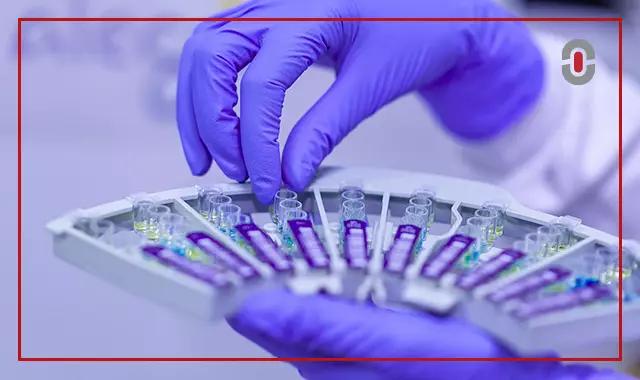
APAC clinical trials involve multiple languages, vendors, and regulatory expectations, which significantly increases the risk of inconsistent terminology. Without centralized synonym alignment, critical protocol terms drift across documents, leading to data inconsistencies, investigator confusion, and regulatory scrutiny.
Explore insights →
Medical translation in Asia is complex because it merges technical accuracy, cultural understanding, and strict compliance. The combination of multiple writing systems, varying health communication norms, and region‑specific regulations makes precision and subject‑matter expertise essential.
Explore insights →
In healthcare, language isn’t just communication - it’s care. Even minor translation errors can lead to serious consequences, from medication mistakes to emotional distress. Professional medical localization ensures clarity, compliance, and patient confidence across all touchpoints.
Explore insights →
Every label, leaflet, IFU, and safety document you release carries your reputation and a patient’s next decision. When the multilingual layer behaves with the same discipline as your manufacturing, QA, and pharmacovigilance, translation stops feeling like a risk you hope is covered and becomes a part of the system you can stand behind.